
When you hear a thumping, whooshing, or beating sound that seems to match your heartbeat, it’s hard to shrug off. Pulsatile tinnitus can feel scary, distracting, and strangely loud when everything else is quiet.
Some causes are mild. Others need prompt medical attention. The good news is that there often is a path to relief once you find the reason behind the sound, and that’s where the right remedy starts.
Understand the possible causes before you try a remedy
A good pulsatile tinnitus remedy depends on the cause. That’s the part that trips people up. The noise itself is a symptom, not the whole problem.
Sometimes the trigger is simple, such as earwax buildup, congestion, a spike in blood pressure, stress, anemia, or a thyroid issue. Other times, the sound comes from blood flow changes near the ear. If you want a broader look at common causes of pulsatile tinnitus, it helps to see how many different issues can create the same heartbeat-like noise.
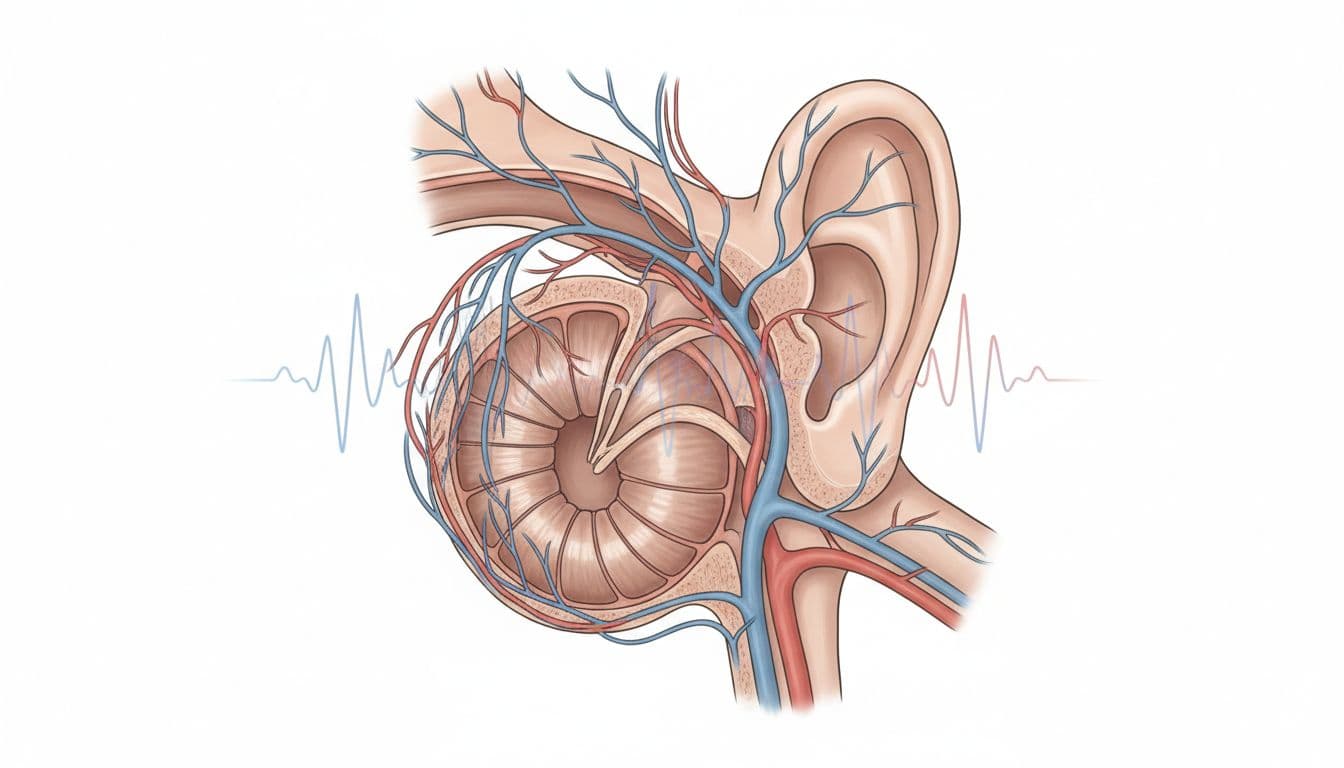 Think of the sound like a warning light on your dashboard. The light matters, but you still need to know what’s under the hood. Trying random fixes without that step can waste time.
How sound that matches your pulse points to a specific problem
Regular tinnitus often sounds like ringing, buzzing, or hissing. Pulsatile tinnitus is different. It tends to beat in time with your pulse, which can point toward blood flow or pressure changes rather than the usual ear-noise pattern.
That doesn’t automatically mean something dangerous is happening. It does mean the symptom deserves a closer look. A change in nearby blood vessels, pressure in the head or neck, or even a blocked ear that changes how you hear internal body sounds can all make your pulse more noticeable.
You might hear it all day. You might only notice it at night. For some people, it gets louder when they lie down, bend over, or settle into a quiet room. That pattern matters because it gives your doctor clues.
If the sound keeps time with your heartbeat, treat it like a clue, not background noise.
Common triggers you can notice in daily life
This is where your own observations help. Does the sound get louder after coffee? During stress? After exercise? When you’re congested? When you sleep on one side? When you turn your head?
Those details aren’t small. They can help narrow the cause faster.
Start paying attention to a few basics: what time it happens, whether it’s in one ear or both, what you were doing before it started, and whether you also had headache, dizziness, vision changes, or pressure in the ear. A simple note on your phone or a notebook works fine.
You don’t need to build a perfect symptom journal. You only need enough information to spot patterns. Sometimes that pattern is what moves you from guessing to getting the right treatment.
Home steps that may ease pulsatile tinnitus
Home care can help lower the stress and annoyance of the sound. It can also support recovery if your doctor says the cause isn’t serious. Still, these are symptom helpers, not a one-size-fits-all cure.
If your pulsatile tinnitus is new, one-sided, or getting worse, don’t let home remedies become a delay tactic. Use them as support while you get the symptom checked.
Lower stress and give your nervous system a break
Stress doesn’t always cause the sound, but it can make it feel louder, sharper, and harder to ignore. Once your brain starts monitoring it, the noise can take up way too much space in your day.
 Start simple. Try slow breathing for two minutes, with longer exhales than inhales. Take a short walk. Dim the room at night. Cut down on constant stimulation if your day has been loud, busy, and screen-heavy.
Sleep matters more than most people think. A tired brain notices every little sound. Better sleep won’t fix every cause, but it can lower how intense the sound feels. If silence makes the pulse noise jump out, a fan or soft background sound at bedtime may help take the edge off.
Protect your ears and avoid common irritation
If your ears feel blocked, full, or sensitive, don’t start poking around. Cotton swabs, ear candles, and random drops can make things worse. If earwax is part of the problem, safe removal should come from a clinician, especially if the ear feels blocked or your hearing changed.
Noise matters too. Loud concerts, power tools, and blasting earbuds can irritate your hearing system and make any tinnitus feel more intrusive. Keep headphone volume low. Give your ears breaks. If you’re in a loud place, wear hearing protection.
A blocked sensation doesn’t always mean wax, either. It can come from pressure changes, congestion, or inflammation. That’s one reason self-treating can go sideways. When the ear feels off and the sound is rhythmic, it’s smarter to get it checked than to experiment.
Support your body with simple health habits
Sometimes the best home steps are the boring ones, because they help your whole system settle down. Stay hydrated. Eat balanced meals. Don’t skip sleep for days and expect your body to stay quiet.
If blood pressure is part of the story, the basics matter. Take prescribed medicine as directed. Cut back on whatever pushes your pressure up if your doctor has already told you what that is. That might be too much sodium, too much caffeine, poor sleep, or constant stress.
Low iron, thyroid problems, and dehydration can also make the sound worse in some people. Home habits won’t fix a medical condition on their own, but they can lower strain on your body while you sort out the cause. Think support, not miracle cure.
Medical treatments that may treat the root cause
The most effective remedy often comes from treating what’s behind the sound. That’s why medical care can make such a big difference. You’re not only trying to cover the noise, you’re trying to remove the reason it’s there.
A doctor may check your ears, blood pressure, hearing, and medical history first. Depending on what they find, you may also need blood tests, a hearing exam, or imaging. If you want a broader view of tinnitus treatment options, it helps to separate symptom relief from treatment aimed at the actual cause.
When medication or pressure control may help
If high blood pressure is causing the sound, controlling it may reduce or stop the pulsing. If anemia is the issue, treating low iron or blood loss can help. Thyroid problems may improve with the right medicine. Sinus or middle ear problems may calm down once the inflammation or pressure is treated.
Sometimes the fix is a new medicine. Sometimes it’s a dose change. Sometimes it’s treating a different condition that happens to be creating the noise near your ear.
That’s why guessing doesn’t work well here. A supplement meant for generic ringing won’t do much if your real issue is blood pressure, thyroid imbalance, or a vascular problem. The goal is to fix the source, not mask it and hope.
When procedures or specialist care are needed
Some cases need more than basic treatment. Certain blood vessel problems near the ear or brain may call for imaging, a specialist visit, or a procedure. That sounds heavy, but it doesn’t automatically mean the worst-case scenario.
It means your doctor wants a better look.
You may be sent to an ENT, an audiologist, a neurologist, or a vascular specialist, depending on the pattern of your symptoms. If the pulsing is persistent, one-sided, or tied to other warning signs, that extra step is often the right move.
For some people, the answer is reassuring. No dangerous cause shows up, and the focus shifts to symptom management. For others, finding the issue leads straight to treatment that makes a real difference. Either way, getting checked gives you something better than guesswork.
Know the warning signs that mean you should get checked soon
This part is simple. Don’t wait around if the sound is new, only happening on one side, getting worse, or coming with other symptoms.
 Get medical care soon if you notice any of these:
- the pulsing starts suddenly
- it’s only in one ear
- it’s getting louder or more frequent
- you also have headache, vision changes, dizziness, or fainting
- your hearing drops, your ear feels sharply painful, or fluid is coming out
- you have chest pain, a racing heartbeat, weakness, numbness, or trouble speaking
Those symptoms can point to a problem that needs quick attention. If chest symptoms or neurological changes show up, urgent care or the ER may be the safer move.
Tracking symptoms is still useful. Write down when it happens, what it sounds like, what side it’s on, and what came with it. That helps your doctor. It does not replace getting evaluated.
The path to relief starts with the cause
There isn’t one universal remedy for pulsatile tinnitus, because the sound can come from more than one source. What helps you depends on the root cause, not on the noise alone.
You can support yourself with calm, safe home steps, better sleep, ear protection, and symptom tracking. But if the pulsing is new, one-sided, worsening, or tied to other warning signs, don’t sit on it.
Once you get the right diagnosis, relief often gets a lot more realistic. Many people improve when treatment matches the reason the sound started in the first place.